“Just Be Quiet”: How a Viral Cable News Moment Revealed the Power of Silence in Modern Media
In the hyper-charged world of American cable news, confrontations usually follow a familiar script. A public figure posts a provocative statement online. A television host fires back with sharper rhetoric. The exchange escalates, producing heat, headlines, and social media clips engineered for outrage. Viewers tune in not for reflection, but for conflict.
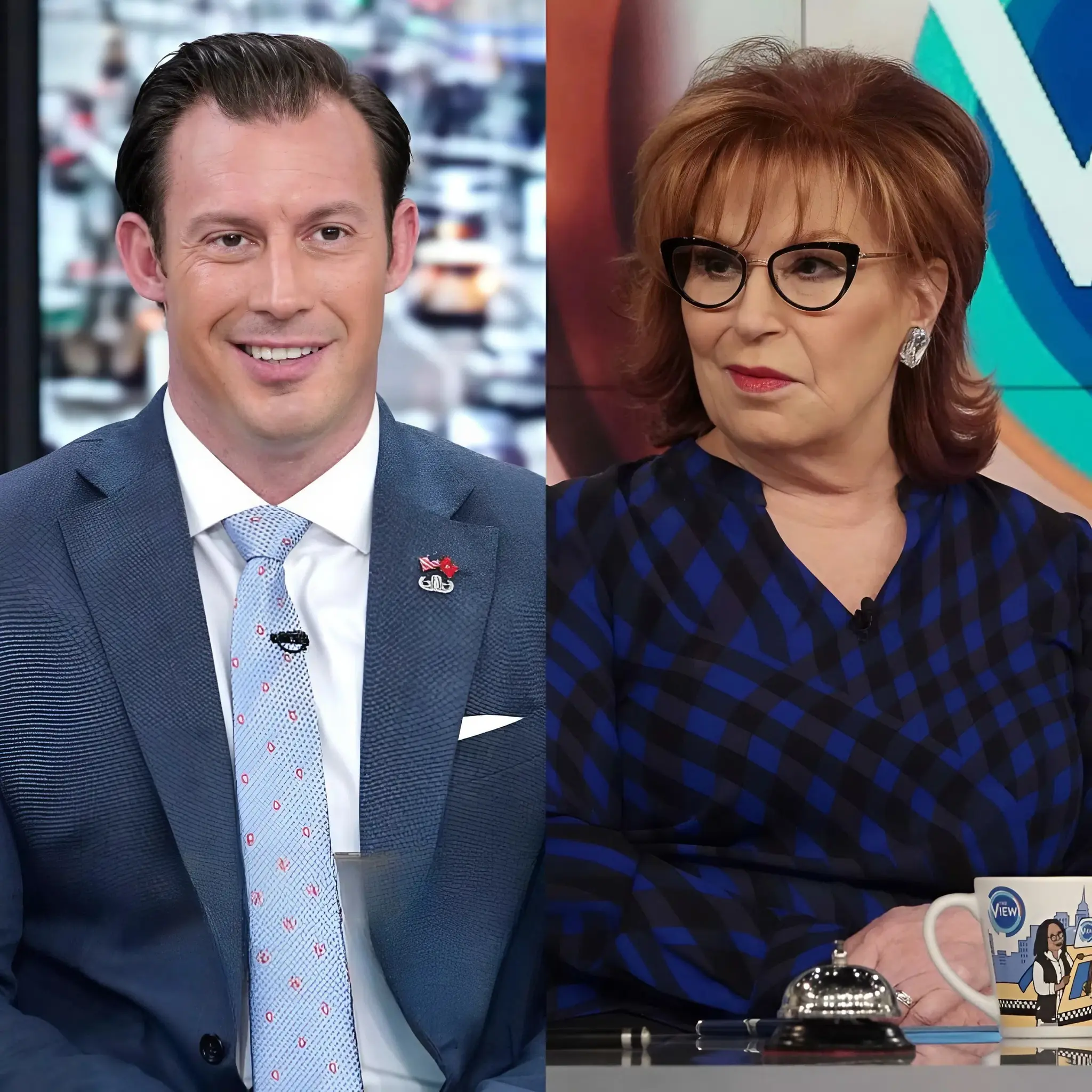
That is why a recent viral moment involving Fox News host Jesse Watters and Democratic Congresswoman Jasmine Crockett has captured such widespread attention. According to widely shared accounts, Watters responded to a harsh social media post from Crockett—one in which she allegedly labeled him “dangerous” and urged him to “be quiet”—not with mockery or counterattack, but with restraint. On live television, he calmly read her post aloud, word for word, before offering a measured analysis.
No shouting. No insults. No dramatic escalation.
The studio, observers claim, fell unusually silent.
Whether one admires Watters, strongly disagrees with him, or avoids cable news altogether, the reason this story resonated so widely is not difficult to identify. It disrupted the emotional machinery that drives modern political media.
A Quiet Moment That Felt Loud
Viewers accustomed to political shouting matches expected a verbal duel. Instead, they witnessed something closer to a pause—an interruption in the rhythm of outrage. Watters did not attempt to “win” by delivering a sharper one-liner. He simply brought the words into the open and allowed them to stand on their own.
This technique—reading a post slowly and verbatim—can be surprisingly disarming. On social media, statements often feel fleeting, buried within endless scrolling and stripped of consequence. When spoken aloud on national television, however, those same words can sound heavier, more deliberate, and more revealing than originally intended.
Media scholars have long noted this phenomenon. Research from the Pew Research Center shows that political communication online tends to reward brevity, emotional intensity, and confrontation, often at the expense of nuance and accountability. When digital language is relocated into slower, more deliberate formats, its tone and implications become harder to ignore.
That shift, more than any individual personality, is what created the tension in the room.
Why Reading Aloud Can Be More Powerful Than Arguing Back
There is a reason some of the most viral media moments contain little spectacle. They rely on contrast. In an ecosystem designed for speed and outrage, stillness becomes a form of rule-breaking.
Reading a hostile message aloud accomplishes several things at once:
-
It slows the pace. A slower tempo invites comprehension, leaving less room for ambiguity or rhetorical evasion.
-
It shifts responsibility. The focus moves from “host versus politician” to “public language versus public standards.”
-
It returns judgment to the audience. Viewers are invited to interpret the words themselves, rather than through an argumentative filter.
Communication experts often describe this as “context restoration”—placing language back into a setting where tone, intent, and consequence become visible. According to scholars cited by outlets such as Columbia Journalism Review, this can expose exaggeration, hostility, or imprecision without a single direct accusation.
In that sense, the silence that reportedly followed was not empty. It was evaluative.
The Broader Context: Watters, Crockett, and Media Trajectories
This moment did not arise in a vacuum. Jasmine Crockett has become a prominent Democratic voice in the House of Representatives, known for sharp rhetoric and a combative communication style that resonates with online audiences. Jesse Watters, meanwhile, occupies a prime-time position within conservative media, frequently engaging Democratic figures as part of broader cultural and political debates.
Their paths have crossed before, both directly and indirectly. Coverage across multiple outlets—including commentary noted by The Daily Beast and other media-watch organizations—has highlighted Crockett’s role in partisan messaging and Fox News’ repeated engagement with her public statements.
In that light, the viral clip functions almost like a narrative turning point—one that audiences were primed to amplify.
What the Clip Says About Modern Political Incentives
Modern politics rewards immediacy. Shorter messages travel farther. Stronger emotions generate more clicks. This dynamic has been extensively documented by researchers at institutions such as Harvard’s Shorenstein Center on Media, Politics and Public Policy, which has warned that outrage-driven media cycles can distort public discourse.
When a statement is removed from that fast-moving stream and spoken slowly, its character can change. It ceases to be “just a post” and becomes a public declaration, complete with tonal and ethical implications.
This does not automatically render one side correct or incorrect. What it does is alter the playing field.
As many viewers seemed to intuit, calm does not necessarily defeat confrontation—but it redefines what victory looks like.
The Underrated Power of Refusal
What shocked many viewers was not the criticism itself—politicians criticize media figures every day—but the refusal to escalate. The expected response would have been a sharper insult, a dramatic monologue, or a segment framed for maximum outrage.
Instead, restraint took center stage.
Media analysts often note that restraint is an undervalued strategy because it rarely trends—until it does. When effective, it resembles a judo move: allowing the force of the opponent’s words to continue forward, while stepping aside.
Some viewers interpreted the moment as disciplined and mature. Others viewed it as a calculated media tactic. Regardless of interpretation, it proved compelling precisely because it broke from routine.
Why the Moment Traveled Across Political Lines
One reason the clip spread so widely is fatigue. Audiences across ideological divides report exhaustion with perpetual conflict. Surveys from Pew consistently show declining trust in political media and frustration with polarized debate formats.
A segment that momentarily rejects the expected format can feel like a brief clearing in the noise. It does not require viewers to admire either figure involved. It simply offers something rare: an unscripted pause.
That neutrality makes it easier to share—and harder to dismiss.
Beyond Personalities: The Larger Lesson
Strip away the names and networks, and the underlying question remains:
What happens when public discourse becomes faster and harsher—and someone chooses to slow it down and repeat the words exactly as spoken?
Sometimes it reveals cruelty. Sometimes exaggeration. Sometimes it exposes how unserious a conversation has become.
And sometimes, perhaps most powerfully, it reminds us that the loudest tool is not always the best one—it is simply the easiest to use.
A Final Thought
Cable news will continue to operate as it always has. Politicians will continue to post provocative messages. The cycle will not end tomorrow.
But moments like this—when temperature drops instead of spikes—suggest a different kind of influence. Not louder. Not more aggressive. Just clearer.
In a media environment saturated with noise, clarity can feel almost shocking.