Fact Check: The Coronation Catastrophe Prince William's Rage Breaks Westminster Silence
Celebrity 13/11/2025 15:42
For nearly three decades, the legacy of Diana, Princess of Wales, has been trapped between grief and relentless, often unfounded, speculation. While the tragic circumstances of her death in 1997 spurred endless conspiracy theories, a quiet discovery—a single strand of mitochondrial DNA—recently provided a truth far more profound than any tabloid headline, simultaneously debunking a vicious paternity rumor and confirming a surprising heritage that reaches across continents. This dual revelation has effectively lowered the volume on the most sensational aspects of the Diana myth, replacing them with scientific reality.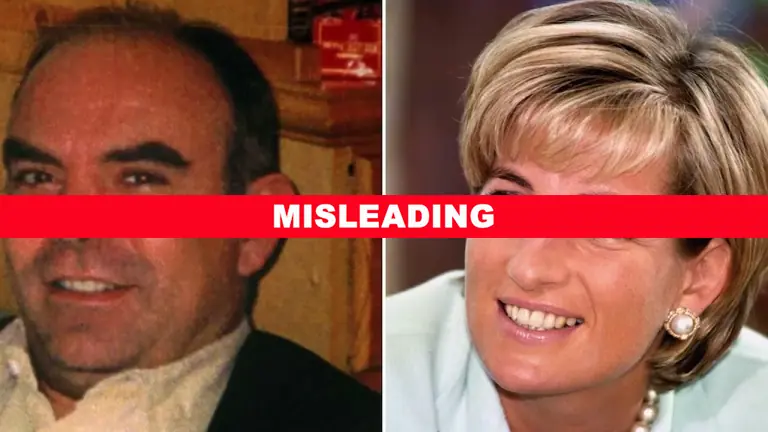
The most persistent and damaging rumor that shadowed the Spencer and Windsor families was the claim that Prince Harry was not the son of King Charles III, but of James Hewitt, the former cavalry officer with whom Diana later admitted to having an affair. The rumor, often fueled by their shared red hair, persisted because it was spicy—not because it was true.
The timeline alone serves as the definitive refutation of this conspiracy (Source: Royal Biographers). Harry was born on September 15, 1984. Hewitt, by his own repeated admission, did not meet Diana until 1986—nearly two years after the Prince's birth. Hewitt himself has publicly stated, emphatically, that there is "no possibility whatsoever that I am Harry's father" (Source: Daily Mirror). This biological impossibility was finally put out of its misery when Prince Harry addressed it in his memoir, Spare (2023), calling the story "laughable" and a cruel tabloid device used to destabilize him (Source: Penguin Random House). The consensus among royal observers is clear: the claim lingers purely as a piece of celebrity folklore, devoid of factual basis.
The genetic twist that truly rewrote royal history was not about paternity, but about heritage. Family historians had long whispered that Diana’s maternal line extended far beyond the British aristocracy, potentially threading back through the port city of Surat, India. This lineage traced back to a woman named Eliza Kewark, Diana’s fifth great-grandmother.
In 2013, this historical whisper became a scientific fact. Researchers, testing two of Diana’s distant maternal relatives, confirmed a rare and telling discovery: the presence of the mitochondrial DNA (mtDNA) haplogroup R30b (Source: The Telegraph). Since mitochondrial DNA is passed strictly from mother to child through an unbroken female line, this marker is an undeniable genetic anchor. The haplogroup R30b is strongly associated with South Asia (Source: University of Edinburgh Genetics Department).
This genetic evidence formally sealed the paper trail linking Eliza Kewark—who was the companion of Theodore Forbes, a Scottish merchant with the East India Company—to the royal family's bloodline (Source: Scottish Historical Society). By extension, the revelation confirmed that both Prince William and Prince Harry carry Indian ancestry. The significance of this finding was not one of scandal, but of expansion: it showed the royal family was not merely a map of Europe, but an intricate tapestry of global trade, migration, and interwoven identities, mirroring the global compassion Diana championed in her public life.
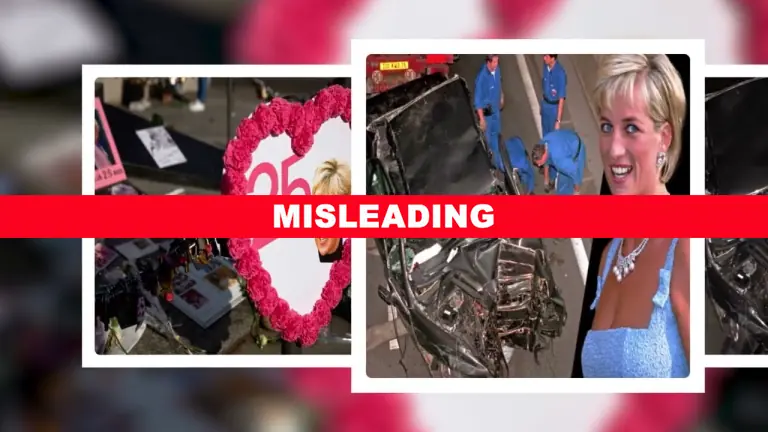
The genetic revelations also provided context to the years of conspiracy theories surrounding the event that defined Diana's public memory: the 1997 Paris car crash. Despite the public hunger for a sophisticated assassination plot, three major, exhaustive investigations have consistently converged on the same sobering conclusion:
The French Investigation (1997): Led by Judge Hervé Stéphan, this initial inquiry found that the crash was a result of the driver, Henri Paul, speeding while intoxicated, exacerbated by the pressure from pursuing photographers (Source: French Judicial Records).
Operation Paget (UK, 2004–2006): Overseen by Lord Stevens, this massive British police inquiry rigorously examined every conspiracy theory, including claims of tampering, a "blinding flash" theory, and alleged pregnancy. The conclusion was unequivocal: no credible evidence of an assassination plot (Source: Operation Paget Final Report).
The Public Inquest (2008): After weighing all the evidence in full public view, the jury returned a verdict of unlawful killing due to the gross negligence of both the driver and the pursuing photographers (Source: UK Inquest Proceedings).
A detail that stung many more than any conspiracy theory was the testimony of experts who noted that Diana and Dodi Fayed were not wearing seatbelts. Experts testified that the simple act of fastening a seatbelt could have saved their lives, underscoring that the tragedy was ultimately the result of terrible, human decisions under extraordinary pressure, not a political conspiracy (Source: UK Inquest Proceedings).
In a world addicted to drama, the findings provided by DNA delivered insight. The greatest "secret" of Diana's life was not a scandal, but a heritage that quietly folded more people into the story of the British monarchy.
The scientific and judicial findings have collectively closed the gap between the sensational myth and the complicated reality. Diana’s legacy is now reframed: it is less about how she died, and more about who she was—a princess whose empathy circled the globe, and whose family story was, quite literally, already a map of the world.